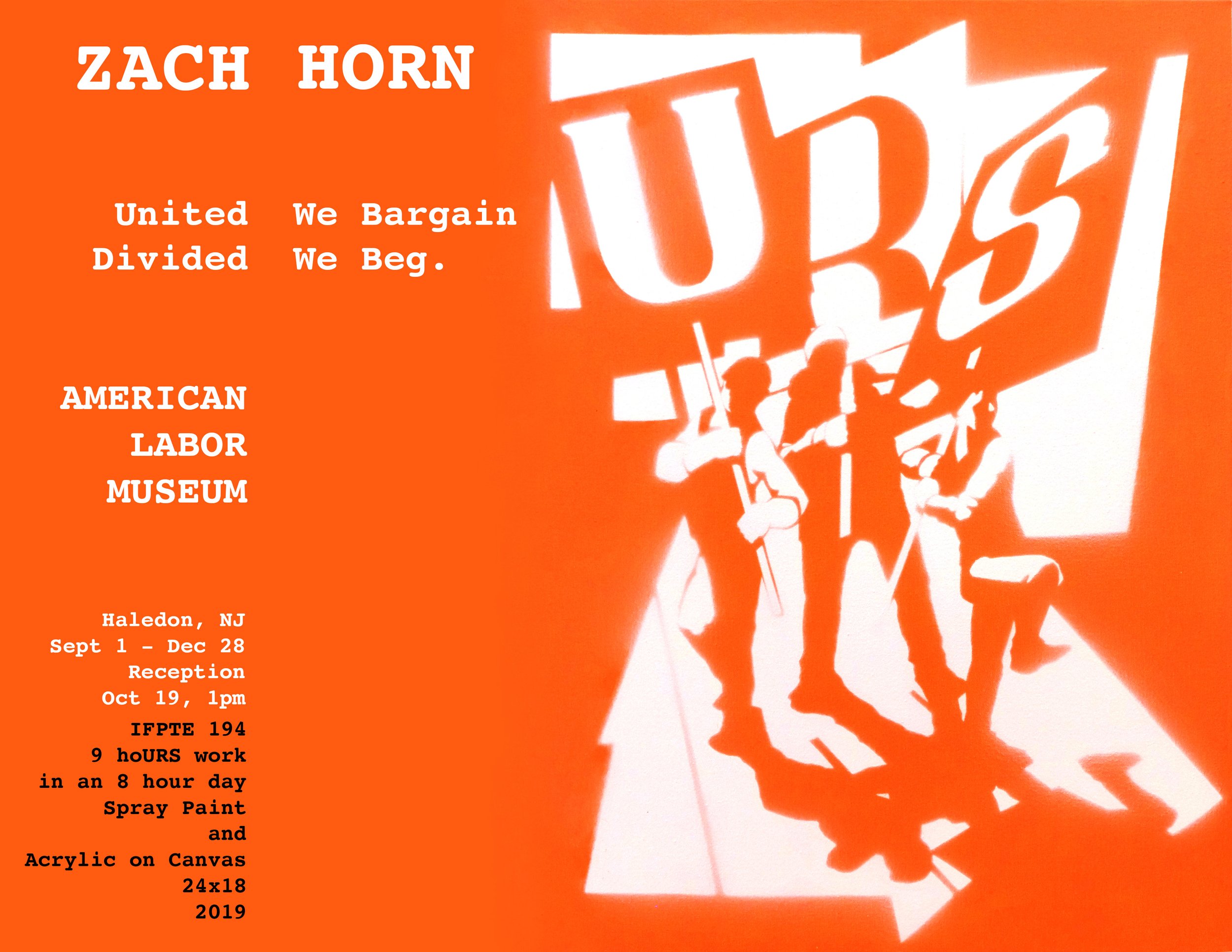
UNITED WE BARGAIN, DIVIDED WE BEG
Museum of Work and Culture, Woonsocket, RI
American Labor Museum, Haledon, NJ
September 2019 - December 2020
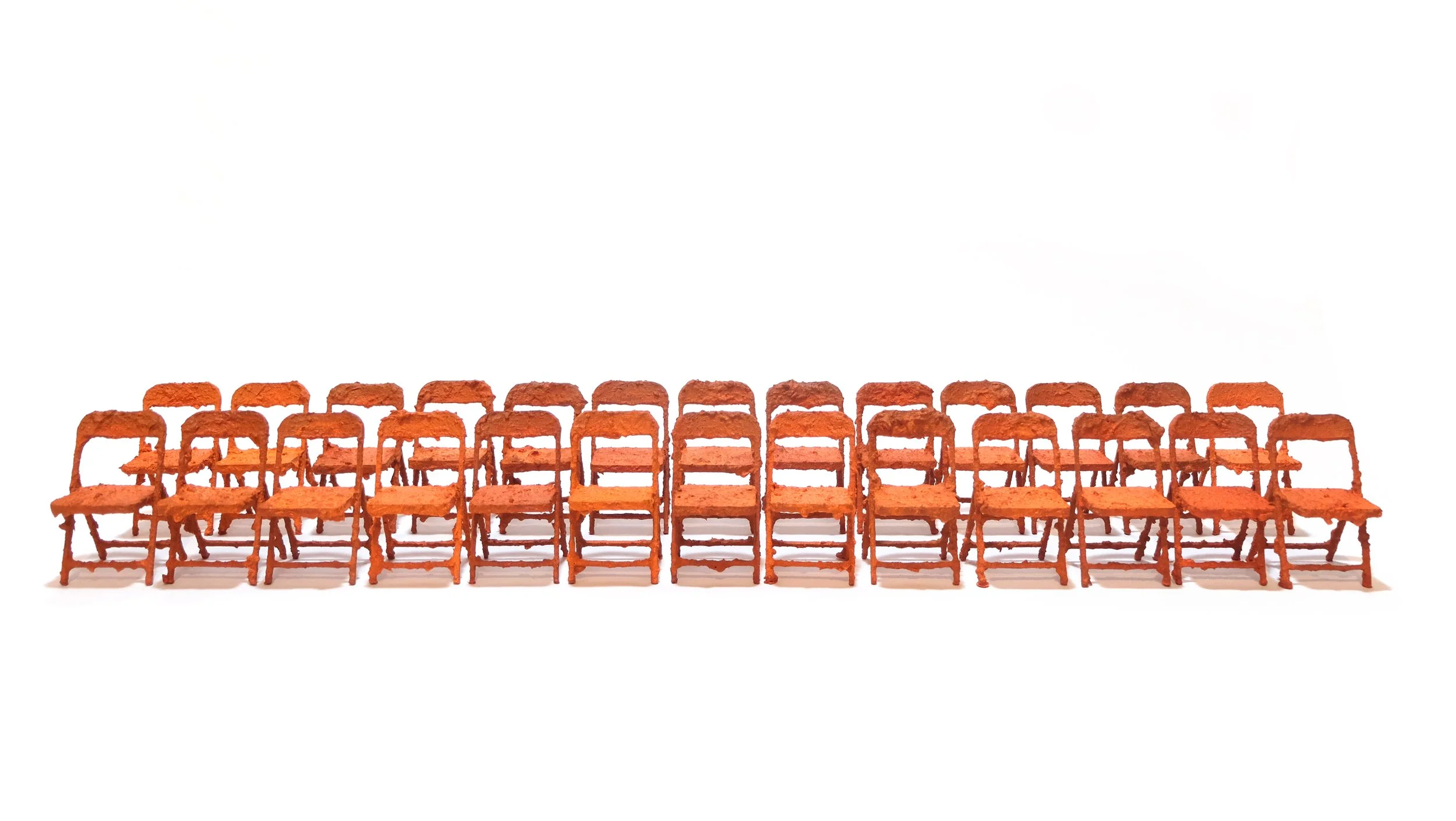
UAW 2110, ACRYLIC PAINT, DIRT, AND ACRYLIC SHEETING, DIMENSIONS VARIABLE, 2020
UNITED WE BARGAIN, DIVIDED WE BEG
In the early 1960’s, my grandmother, Bernice, helped organize the Philadelphia public school teachers. John A. Ryan presided over the Philadelphia Federation of Teachers, AFT local 3. During that time, my grandmother joined a picket line at an elementary school and was promptly arrested. My grandmother spent the night in jail, though the charges were dropped in the morning. It is easy for me to picture her being taken away in a paddy wagon. She was a mother of three in the early 1960’s, but my grandmother always remained feisty. On February 1, 1965, the PFT finally won official recognition and exclusive bargaining rights. Their membership jumped from 500 in 1961 to 11,000 in 1965. My grandmother never grandstanded, but she was damn proud of standing up for her fellow teachers. She taught me to see labor rights as a matter of fairness. My grandmother passed away two years ago. My work is dedicated to her.
The people featured in my artwork are real union members. Some are identifiable, others are anonymous. Each person is a proud member of a local. In my neighborhood in Boston, I live among pipe-fitters, bricklayers, and heavy machine operators. These are my neighbors. Other figures are members of NJ locals, such as the IFPTE 194. As I expand my work in support of organized labor, I continue to partner with local labor leaders to put workers’ struggles in the human terms.
My artwork is constructed from industrial supplies. There is Tyvek, Asphaltum, Kills 2, Acrylic Sheeting, and Plaster. The sculptures are constructed in steps. I laser cut and heat-bent the chairs. I built cardboard figurative armatures, which I then coated with a paper pulp/plaster mixture. It looks like tuna fish when wet. When the plaster dried, I painted the figures in acrylic paint. In the case of the carpenters union, I coated the acrylic paint with sawdust from the instructional wood shops at the NERCC. The sawdust is both literal and symbolic. What does a carpenter look like? —Covered in sawdust. I chose these rougher materials to reflect the grit of the labor union workers.
The most satisfying aspect to my work is interacting with the unions. In particular, the IBEW Local 2222, invited me to sit through their meeting and to speak to the members. It was fascinating. Four months after their lockout ended, Verizon continued to try to divide their workers. The company wanted the linemen to try to sell Fios while they were installing cable lines. But, the company wanted to pay the sign up bonus individually to each worker, to force linemen into a competition with one another. The union was fighting back to make the incentive structure communal, so that the workers could operate as a team. Their Business Manager, Myles Calvey, put “brotherhood” in the IBEW.
Workers have little protection. It is the union that ensures workers’ rights. I am an artist (and an MTA union member!); My artwork in support of organized labor is my way of giving a visual and moral boost to workers rights.
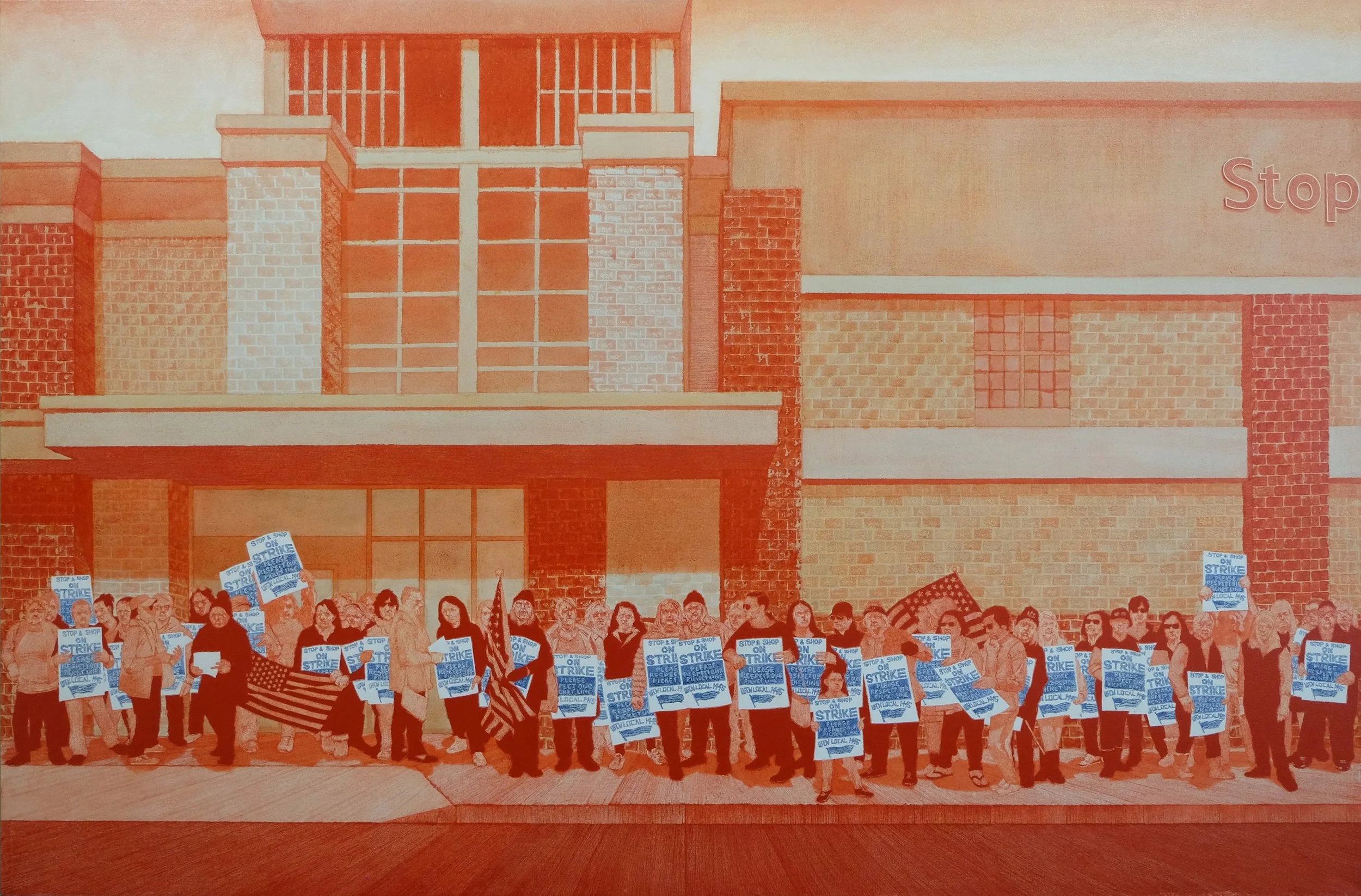
UFCW 1445 CENTER, OIL ON CANVAS, 48”X72”, 2020
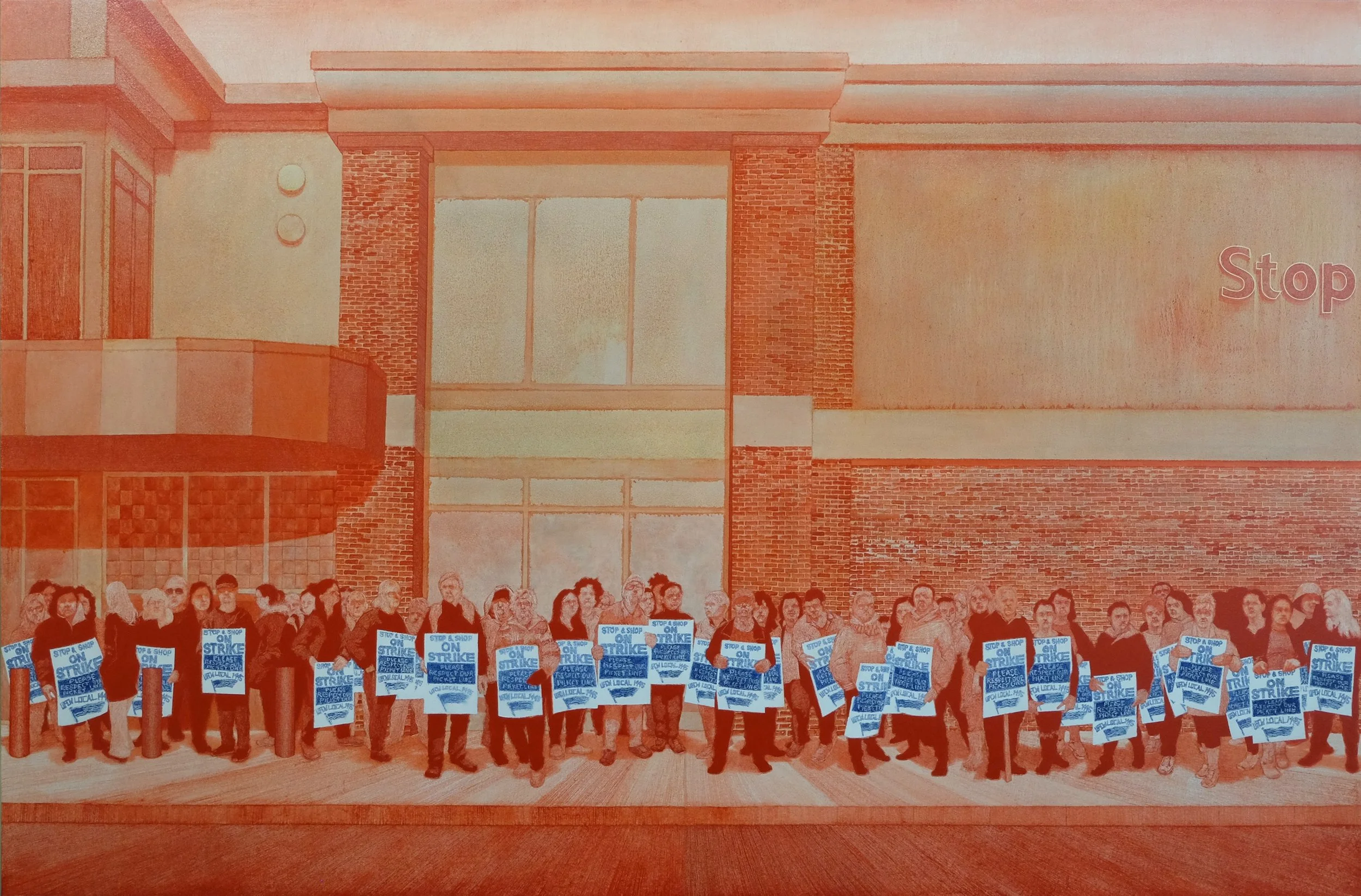
UFCW 1445 Left, OIL ON CANVAS, 48”X72”, 2020
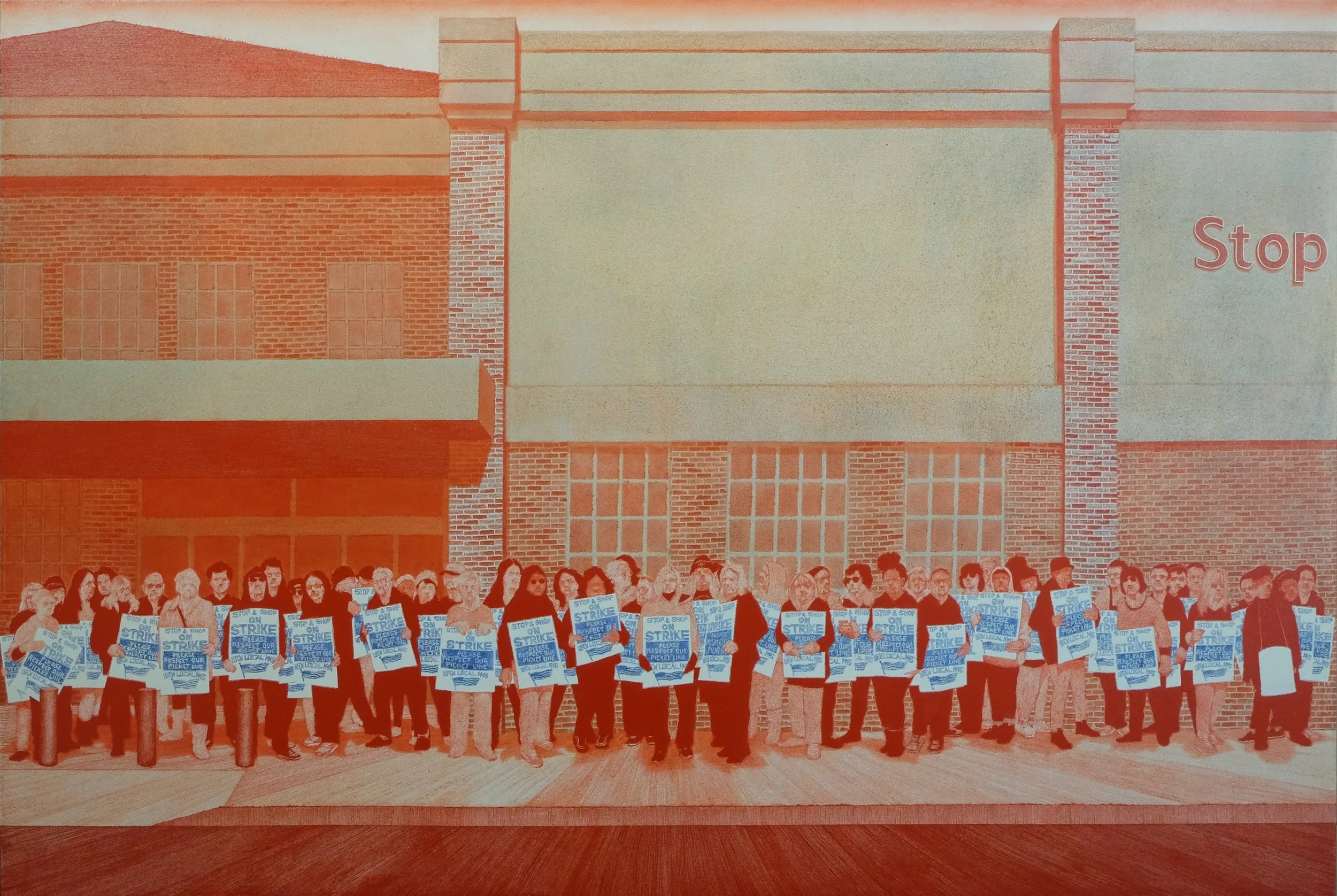
UFCW 1445 Right, OIL ON CANVAS, 48”X72”, 2020